Most of your patients had blood work done in the past year. Their doctor ordered it, a phlebotomist drew it, and a printout came back with a few green ticks and a polite note that everything looked "within range."
That printout almost certainly contains information that would change how you treat them. The problem is that no one has translated it into the things that matter for dentistry, like wound healing, bleeding risk, infection risk, bone response and treatment predictability. Unfortunately, the patient has no idea that any of it is relevant to their dental care.
Dentists are trained to detect disease with what we can see and measure: visually, radiographically, and clinically. And dentists are very good at that. Yet some of the most important factors that determine whether treatment succeeds or fails are the ones that you can't see. A small number of high-yield blood markers help close that gap.
This is not an effort to turn dental practices into medical laboratories or to order endless panels just in case. It is instead about understanding a handful of tests that meaningfully change what you do in the chair, including whether you proceed, whether you pause, how you manage surgical risk, and when picking up the phone to refer could significantly alter a patient's long-term health. It also positions you alongside the current fastest-growing practices. These are the ones treating patients as whole people rather than merely as a set of teeth.
Here are the five markers I'd start with.
Read the bloodwork, the heart, and the new weight-loss drugs.
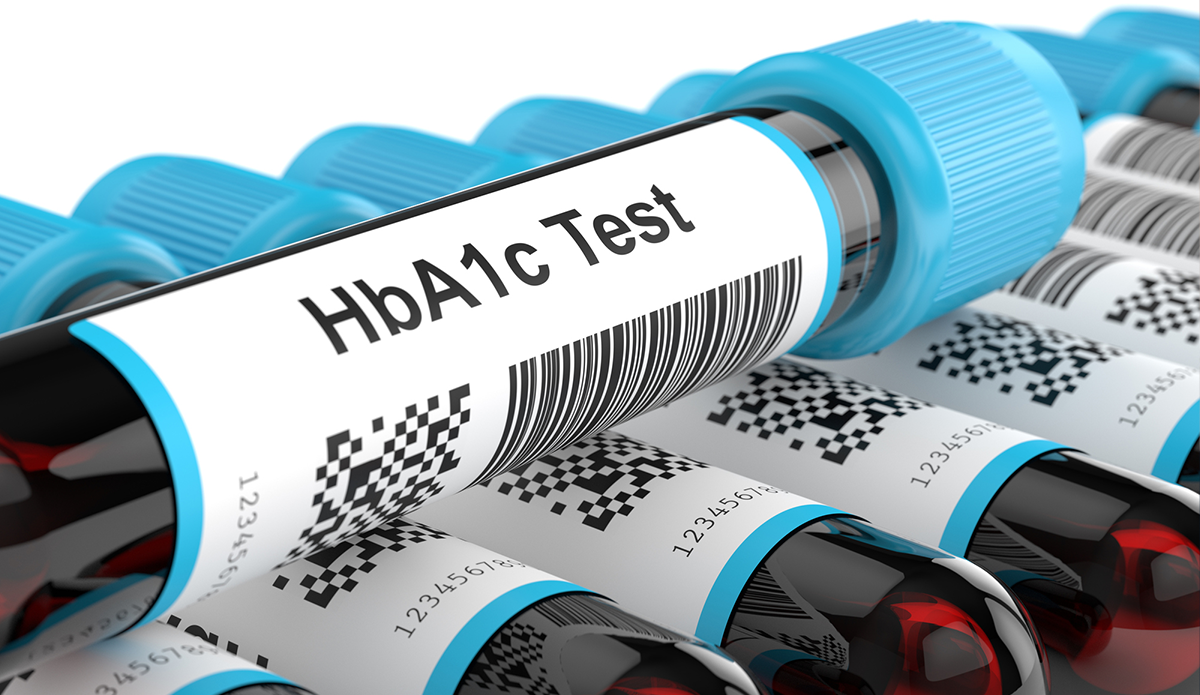
1. HbA1c: The Foundation Marker
What it measures: Average blood glucose over the past two to three months. No fasting required and no special preparation needed.
Why it matters dentally:
- Impaired wound healing
- Higher infection risk
- Worse periodontal outcomes
- Increased implant failure risk
For a dentist, this is the single most useful number to know about a patient before treatment. A patient with undiagnosed pre-diabetes is the same patient whose periodontal disease doesn't respond to scaling and whose surgical sites take longer to heal. Knowing the number alters the consultation, the timing, and sometimes the treatment plan itself.
HbA1c also has the strongest evidence base for use in dental settings, which is why it's such a sensible place to start. Point-of-care analysers are now compact, accurate, and well-validated against laboratory measures. A study integrating chairside HbA1c into routine periodontal care in Malaysia found that over 40% of patients with periodontitis screened were classified as at risk, and a substantial proportion were subsequently confirmed to have pre-diabetes or diabetes. These were patients who had no idea anything was wrong.
If you start anywhere, start here.
2. High-Sensitivity CRP: The Inflammation Bridge
What it measures: Low-grade systemic inflammation.
hs-CRP moved into mainstream cardiovascular risk assessment with the 2025 American College of Cardiology guidance, and the data behind that decision is striking. A UK Biobank study of over 400,000 people found that those with hs-CRP above 3 had a 34% higher risk of major cardiovascular events, a 61% higher risk of cardiovascular death, and a 54% higher risk of death from any cause compared to those with a reading below 1. These were people considered well by conventional markers.
Why it matters to dentists:
- Periodontal disease is itself an inflammatory condition. An elevated hs-CRP tells you that inflammation isn't confined to the mouth; it's circulating, contributing to cardiovascular risk, and shaping how tissues will respond to treatment.
- It helps contextualise periodontal severity and identifies patients who may need a medical conversation.
- Above 10, the reading reflects an active inflammatory process and warrants a pause before elective work.
3. Vitamin D: Bone Biology in Action
Vitamin D deficiency is extraordinarily common, and its consequences for dentistry are concrete. Low levels are associated with up to a fourfold increase in early implant failure.
Mechanistically:
- Reduced bone-to-implant contact
- Impaired new bone formation around the implant
- Lower stability quotient on resonance frequency analysis
Correcting deficiency before surgery improves outcomes, and the intervention, supplementation at 2,000 to 4,000 IU daily, is about as straightforward as treatment decisions get.
One important nuance on supplementation is that vitamin D should be taken alongside vitamin K2. Vitamin D increases intestinal absorption of calcium, which is exactly what you want for bone formation. But without adequate K2, that calcium isn't directed properly into the bone matrix. K2 activates the proteins that guide calcium into bone and keep it out of arterial walls.
Giving vitamin D without K2 is a bit like increasing the supply of composite without ensuring it gets into the cavity.
4. Renal Function (Creatinine and eGFR): The Silent Partner
Renal function is the quiet one on this list, not least because chronic kidney disease is often silent in its early stages and frequently undiagnosed. However, it has a bidirectional relationship with periodontal disease; each makes the other worse. It also affects medication clearance, healing, and overall surgical risk.
Why it matters:
- Bidirectional relationship with periodontitis
- Altered medication clearance
- Impaired healing potential
Two numbers tell most of the story. Serum creatinine measures a waste product that the kidneys filter, and eGFR (estimated glomerular filtration rate) is a calculated value that, in simple terms, gives a reasonable indication of how well the kidneys are filtering blood. Together, they identify patients whose periodontal treatment may need to be approached differently and whose general medical picture warrants a referral conversation.
5. Complete Blood Count: Basic but Critical
The CBC is the most immediately practical number on this list. Knowing these values before treatment is infinitely better than discovering a complication mid-procedure.
Key insights:
- Platelets: If they're low, the patient won't clot normally. Better to know that before a procedure begins than during one.
- Haemoglobin: Anaemia affects treatment tolerance and recovery.
- White cell count: A raised count can indicate active infection or another underlying issue that needs addressing before elective work proceeds.
Most dentists already think about these things implicitly. Reading the numbers makes those instincts more accurate and more defensible.
Start Small, Not Comprehensive
It's tempting to introduce all five at once. I'd resist that impulse. The biggest mistake practices make is trying to do everything in the first month.
Begin with one or two markers that directly change what you do with the patient in front of you. HbA1c is the natural starting point. The equipment is compact, the training is manageable, and feasibility studies have confirmed it integrates cleanly into dental practice. Vitamin D is a close second for any practice doing implants.
Build the referral pathway before you need it. Have the conversation with a local family medicine practice or concierge medical practice. Know where you're sending people and make sure the loop closes, because the value of identifying something early depends entirely on what happens next. Screening only has value if there's a clear pathway for follow-up.
And on the question of whether dentists should be doing this at all: 87% of patients surveyed said it was important or very important that dentists screen for conditions like diabetes. About 80% were happy to undergo finger-prick testing in the dental setting. They're already getting injections in the mouth. A finger prick is the easy part. And patients consistently report that practices offering this kind of integrated care feel like better care, because it is.
The Bigger Picture
Dentistry doesn't need to turn into medicine, but it does need to acknowledge how much medicine already shapes dental outcomes, whether we like it or not. Healing, inflammation, infection risk, and long-term success don't stop at the gingival margin.
Understanding a small, focused panel of blood markers gives dentists the ability to see beyond what's immediately visible and make better decisions for the patient in front of them. It allows you to:
- Improve treatment success
- Identify systemic risk earlier
- Communicate more effectively with physicians
- Deliver more comprehensive, patient-centred care
In modern dentistry, what you don't see may matter just as much as what you do. And on the question of stepping on toes with medical colleagues: when you put the patient at the center, the rest tends to sort itself out. A rising tide raises all boats.
If You Want the Full Picture
This is a starting framework. The interpretation, the protocols, the referral templates, the patient communication, and the practical workflow for integrating blood markers into a dental practice are what turn a good idea into a working part of how you treat.
That's exactly what Dr. Lucy Hooper and I are teaching in our 3-part live course, Dentistry & Whole-Body Health. Session 1, Hidden Signals, covers blood work in dentistry, the oral microbiome, and oral and systemic inflammation. You'll leave with a vitamin D guide, a CBC interpretation guide, an HbA1c clinical guide, and referral letter templates ready to use.
The full series is 9 AGD-PACE-approved CE credits across three live sessions, each with 30-day recording access.