
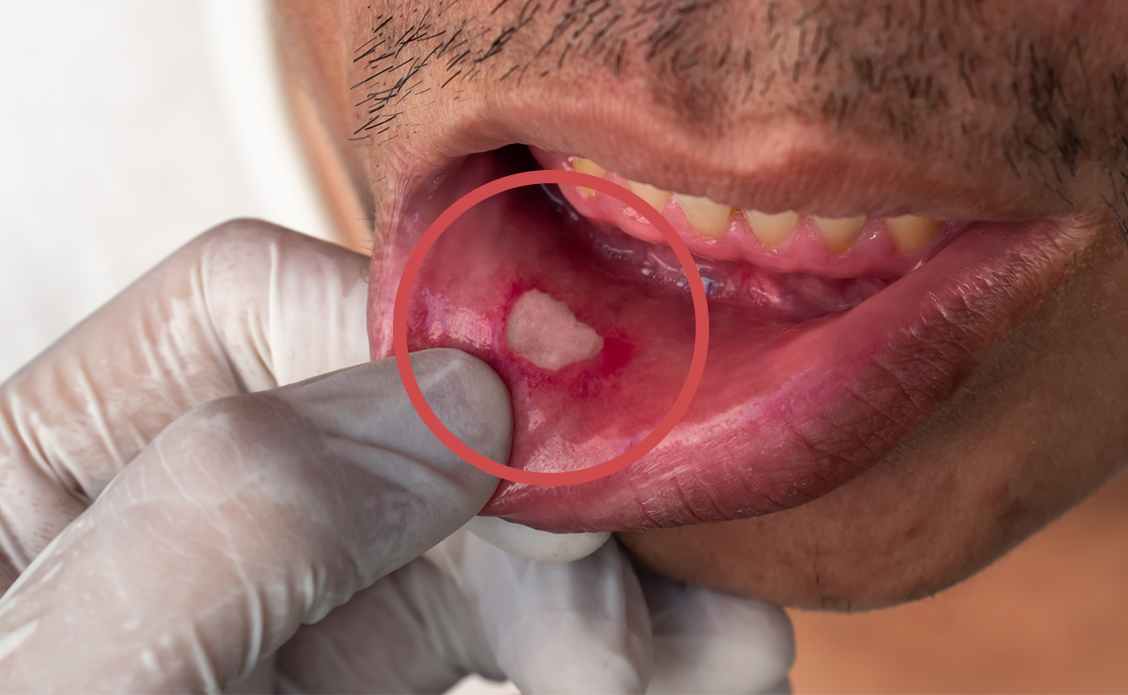
Mouth ulcers are one of the most common oral complaints you’ll see, and also one of the most underestimated. For most patients they are short-lived, painful, and benign. For general dentists they sit at a crossroads between reassurance, prevention, and early detection of systemic disease.
The challenge isn’t recognizing an aphthous ulcer. It’s knowing when not to dismiss one.

Read the bloodwork, the heart, and the new weight-loss drugs.
1. Start by Being Precise About What You’re Seeing
Most ulcers seen in practice are minor aphthous ulcers: small, round or oval lesions affecting non-keratinized mucosa inside the cheeks or lips, the tongue, or the soft palate. They’re painful, typically heal within 7 to 10 days, and do not scar.
Not all ulcers fall neatly into this category, though:
- Major aphthous ulcers are larger and deeper, persist for weeks, and may scar. These should always raise suspicion of an underlying systemic issue.
- Herpetiform ulcers present as clusters of tiny lesions and are frequently misinterpreted unless examined carefully.
The distinction matters. Ulcer type, size, location, and duration should immediately inform your differential.
2. Trauma Is Common, but Rarely the Whole Story
Local trauma remains one of the most frequent triggers: accidental cheek biting, sharp cusps, orthodontic appliances, whitening trays, ill-fitting prostheses. When an ulcer corresponds exactly to a site of mechanical irritation, the explanation is often straightforward.
What’s more important is recognizing when trauma does not fully explain the presentation. Recurrent ulcers in different locations, or ulcers that are disproportionate in severity, should prompt a broader assessment.
3. Recurrent Ulcers: Think Systemic Before Idiopathic
Recurrent aphthous stomatitis is often labelled “idiopathic,” but that diagnosis should be earned rather than assumed.
A structured history is essential. Useful things to ask about:
- Onset and frequency
- Duration of healing
- Typical locations
- Associated symptoms (GI upset, fever, weight loss, joint pain, fatigue)
- Recent medication changes
- Dietary restrictions or risks of malabsorption
- History of immunosuppression or malignancy
Clinical examination should extend beyond the oral cavity. Sometimes the most important clue isn’t oral at all.
4. Nutritional Deficiencies: Underrecognized and Highly Relevant
Recurrent mouth ulcers are strongly associated with deficiencies in vitamin B12, folate, iron, and zinc. The association is significantly greater than in patients without ulcers and correcting these deficiencies has been shown to reduce both the frequency and severity of ulceration.
The biology fits:
- Iron deficiency impairs oxygen delivery and delays tissue healing
- Vitamin B12 and folate are essential for DNA synthesis, particularly in rapidly renewing tissues such as oral mucosa
- Zinc supports antioxidant activity, immune regulation, and epithelial repair
Risk groups you’ll commonly see in general practice:
- Vegans and vegetarians
- Patients with inflammatory bowel disease or coeliac disease
- Older adults with reduced gastric acid production
- Patients taking PPIs or metformin
When ulcers are recurrent, basic blood tests are often a low-effort, high-value intervention.
5. Medications Are a Frequently Overlooked Trigger
Many medications can cause mouth ulcers as a side effect. Beyond chemotherapy agents, commonly implicated drugs include:
- NSAIDs such as ibuprofen
- Nicorandil (used for angina)
- Drugs that interfere with the absorption of key nutrients
If ulcers coincide with the initiation or dose change of a medication, that temporal relationship is clinically significant.
6. Diet: Irritation vs. Causation
Patients often assume food causes ulcers. More accurately, many foods exacerbate mucosal irritation or increase pain, and in some individuals may trigger episodes.
Common irritants:
- Acidic foods and drinks (citrus, fizzy drinks, alcohol)
- Less obvious acidic foods such as tomatoes and strawberries
- Spicy or salty foods
- Hard or sharp textures like toast and crisps
Once an ulcer is present, even mechanical irritation alone can delay healing. Emerging evidence suggests that dietary effects may be mediated through changes in the oral microbiome rather than direct chemical irritation.
7. The Oral Microbiome: A Useful Reframe
A healthy oral microbiome plays a crucial role in maintaining mucosal integrity and regulating inflammation. Disruption through poor diet, smoking, alcohol excess, or harsh oral care products can increase susceptibility to ulceration.
Some strains of Lactobacillus have been shown to reduce inflammatory signaling, support epithelial repair, and decrease ulcer pain and healing time. Probiotic lozenges may be useful adjuncts, but they aren’t substitutes for good oral hygiene, adequate nutrition, and appropriate lifestyle modification.
8. Toothpaste Choices Matter More Than Patients Realize
Sodium lauryl sulfate (SLS) is a detergent commonly added to toothpaste to improve foaming and cleaning. It can also disrupt mucin, the protective layer lining the oral mucosa.
SLS-free toothpaste has been shown to:
- Reduce ulcer frequency
- Decrease pain
- Reduce recurrence
For patients with recurrent ulcers, this is a simple, evidence-based modification worth recommending.
9. Hormones, Stress, and Inflammation
Some patients, particularly women, report ulcers occurring predictably around hormonal changes. The mechanistic data remain limited, but inflammatory signaling likely plays a role.
The same applies to psychological stress, which is known to increase systemic inflammatory mediators. When patients identify stress as a trigger, that observation should be taken seriously in clinical decision-making.
10. Treatment: Support Healing Without Overcomplication
Most minor ulcers require only supportive care:
- Topical anesthetic gels
- Antimicrobial mouthwashes such as chlorhexidine
- Temporary avoidance of irritants
In more severe cases, appropriately prescribed topical corticosteroids can significantly accelerate healing and reduce discomfort.
11. Red Flags: Where General Dentists Add Real Value
The most important contribution of the general dentist is recognizing when an ulcer may not be benign.
Further investigation is warranted if ulcers:
- Persist longer than two weeks
- Exceed 1 cm in size
- Are unusually painful or interfere with eating and drinking
- Recur without a clear explanation
- Occur alongside systemic symptoms
A non-healing ulcer is always a red flag.
Oral squamous cell carcinoma, most commonly affecting the tongue, is increasing in incidence, including among younger patients and women. Early biopsy and referral are critical, and early detection saves lives.
Final Thought
Mouth ulcers are common. Complacency should not be.
For general dentists, they offer a small but significant window into nutrition, inflammation, systemic disease, and early malignancy. The role isn’t only to relieve discomfort. It’s to recognize when something more serious may be present, and to act early.